短道速滑运动员任子威——“站上赛场就要为国争光”(奋斗者正青春)7月中旬,短道速滑国家训练营开启,任子威又回到了他熟悉的冰场。
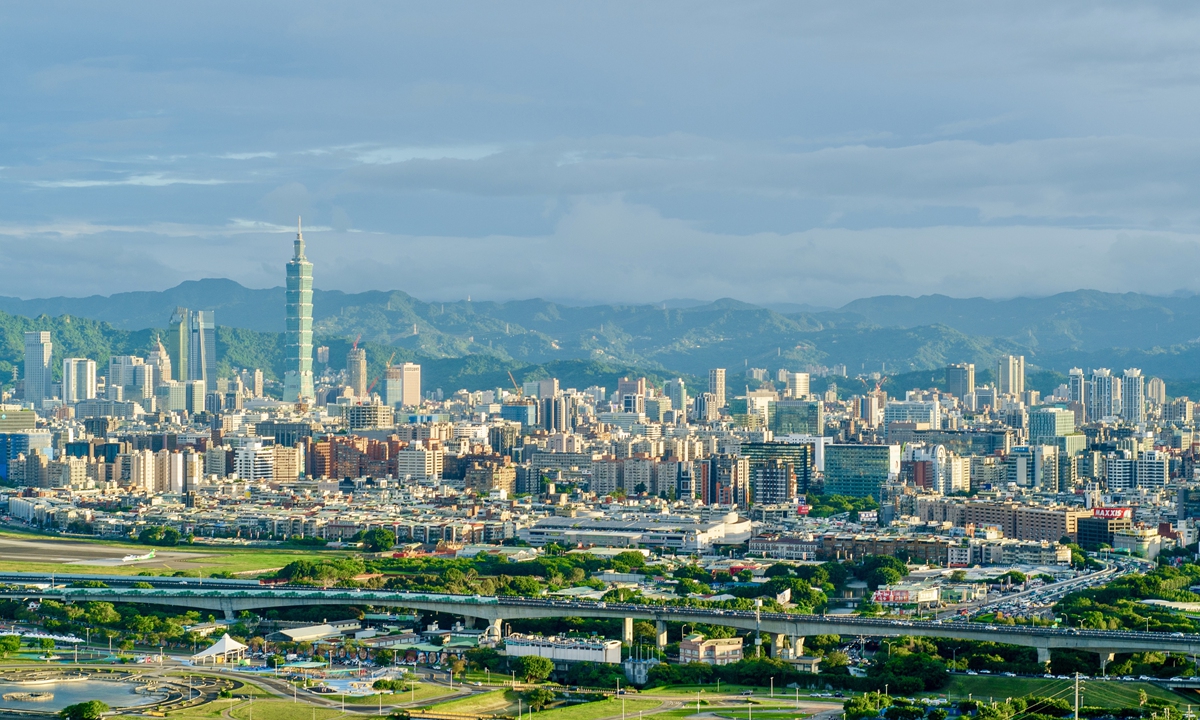
An aerial view of Taipei, Taiwan Province. Photo: VCG
At 2:30 pm on Thursday, Taipei resident Michael Chou received a mobile alert, stating that due to "simulated air attack on communications infrastructure," mobile network access would be affected.
It turned out to be a mobile internet disruption drill in the northern part of the Taiwan island. As part of the Democratic Progressive Party (DPP) authorities' "urban resilience drill," the exercise was designed to simulate scenarios of limited communication resources amid major disasters or wartime conditions and verify public‑service backup capabilities, according to Taiwan-based media.
Yet in the view of observers, this performative farce not only disrupts residents' daily lives, but also acts as a tool for DPP authorities to hype up crises and amplify cross‑Straits confrontation. It essentially serves their scheme of "seeking independence by force" and narrow‑minded electoral interests.
As reported by udn.com, the exercise ran from 2:30 pm to 3 pm. When the alert was triggered, local police diverted pedestrians and vehicles to the roadside and urged the public to take shelter indoors. With mobile network speeds throttled, most people at the site lost mobile internet access; many waited out the drill indoors with available Wi‑fi and passed the time by chatting or reading.
Chou told the Global Times that 4G and 5G connections were heavily throttled during the drill, though Wi‑Fi and text messaging still worked. Even so, the exercise has created real‑world inconveniences, disrupting takeout delivery, transport‑related ticketing and outdoor emergency rescue services.
Local legislator Ko Ju-chun from the Chinese Kuomintang party was also among those opposing the drill. He accused the DPP for abusing emergency alerts which only exposed the public to inconvenience. He noted that a genuine network‑resilience drill should focus on "how the public obtain information after networks go down," yet local people still had no clear idea how to respond in such circumstances, per Taiwan-based media.
"The so‑called mobile internet disruption drill has very limited practical combat value. And if a military conflict breaks out across the Taiwan Straits, the real‑world scenario would be far more complex than the DPP authorities have envisioned, with much higher costs to bear," Zhang Wensheng, a deputy dean and a professor at the Taiwan Research Institute at Xiamen University, told the Global Times.
"The DPP authorities want the drill to stoke tensions, drumming up public backing for its combative defense policies and higher military budgets. Yet it fears over‑hyping the specter of war would disrupt daily life and erode its popular support, hence this superficial, showpiece drill," said the expert.
According to Zhang, the DPP authorities also intend to test Taiwan residents' tolerance threshold. It seeks to observe whether the public will passively acquiesce or push back strongly, so as to assess the mobilization effect of its narratives of "resisting mainland to protect Taiwan" and "rejecting reunification by force."
Prior to the mobile internet disruption drill in northern parts of Taiwan island, seven counties and cities in the central Taiwan region held the same drill on Monday afternoon.
Many residents have questioned why the southern region was exempt. DPP officials claimed southern Taiwan had suffered real‑life communication outages in past years and that a drill in the southern part of the island scheduled to take place at 10 am, when the Stock Exchange of Taiwan region is open, could disrupt real-time stock transactions.
"This drill is utterly absurd," Chou said, "The DPP probably figures that if anything goes wrong in central and northern Taiwan, it does not matter, local mayors would take the blame."
Echoing Chou, Zhang said that the DPP authorities do not want drill‑related disruptions to harm their core support base in southern Taiwan, particularly Tainan and Kaohsiung. By contrast, jurisdictions across central and northern Taiwan include many areas ruled by the KMT, which are being used as test subjects for the exercise.
By striking a posture of "combat readiness," hyping up cross‑Straits confrontation and ramping up ideological mobilization, the DPP aims to serve its interests in the year‑end local elections, he added.
"However, voters always pay more attention to livelihoods, the economy and governance performance in local election. If DPP's political manipulation go too far, it will backfire," Zhang said. "The overwhelming majority of Taiwan compatriots refuse to become cannon‑fodder for secessionists."
The DPP authorities do not hesitate to use the well‑being of Taiwan residents and cross‑Straits peace and stability as bargaining chips for their own political interests, fully laying bare its true colors as a troublemaker, the expert warned.
。在今年2月举行的北京冬奥会上,他收获了两枚金牌。如今,展望2026年米兰冬奥会,他全力奔向下一个目标。

二 | “每一天都力争做到最好,才会离梦想更近一些。”训练营开营仪式上,任子威用自己的经历和感受勉励年轻运动员。登上冬奥会冠军领奖台的路,任子威走了多年,热爱与拼搏深深镌刻进他运动生涯的每个阶段。

三 | 梦想成为现实,初心依然澎湃,他说:“希望为自己、为短道速滑国家队拼出更加精彩的未来。” “咬着牙也要拼,一定要拼到最后” 每次被问起当初为什么选择短道速滑时,任子威总会笑眯眯地说:“真的喜欢,也享受在冰场上驰骋的感觉。

四 | ”凭借这份热爱,他总会拼到最后一刻。从小到大,他都是大家公认“最努力的那一个”。北京冬奥会开幕后首个比赛日,任子威与队友武大靖、曲春雨、范可新、张雨婷夺得短道速滑混合团体接力冠军,为中国体育代表团夺得首金。之后,他又在男子1000米决赛中夺得冠军,实现了中国队在冬奥会该项目上的突破。“当国歌奏响、国旗升起的时刻,那种荣誉感是无法用言语表达的,每次回想都会热泪盈眶。

五 | ”任子威说,这让他更加深刻地体会到自己所肩负的责任,“站上赛场就要为国争光”,这个信念一直鞭策他奋力前行。男子1000米决赛中,队友武大靖示意任子威冲刺的一幕,感动了无数人。

六 | 回忆起当时的情景,任子威说,自己其实也几乎竭尽全力,但队友的鼓励激起了他的斗志,“咬着牙也要拼,一定要拼到最后。” 关键时刻顶得住、豁得出,这份实力与底气源自多年的刻苦努力。备战北京冬奥会的日子里,任子威和队友们面临着多重考验。

七 | “有时候觉得训练累,坚持不下来,就让自己再咬牙顶一顶。”任子威表示,“过程做好了,才会有好的结果。” “这些年,拼尽全力已经成了我的一种习惯,不单是我,整个中国短道队,拼搏精神一直在传承发扬。

八 | ” “为了实现梦想,什么困难都可以克服” 从懵懂少年,到平昌冬奥会上初出茅庐,再到北京冬奥会上收获两金,任子威的成长之路由他为自己设定的一个个目标组成。

九 | 在奋力追寻冬奥冠军梦想的过程中,他喜欢脚踏实地,走好脚下每一步。任子威7岁接触滑冰,刚开始他也会偷懒,总被爸爸批评。“后来每次训练,爸爸都在旁边监督着,慢慢地,咬牙坚持就成了习惯。

十 | ” 小时候,为了兼顾学业和训练,他每天清晨5点起床到冰场训练,下午放学后还要练到天黑才回家。肯付出、能吃苦,他很快在同龄队员中脱颖而出。2010年、2011年,任子威两次受伤骨折,运动生涯差一点终止。打着石膏躺在床上的日子里,他有过对未来的怀疑,却发现自己始终放不下对短道速滑的热爱。“在父母和启蒙教练的鼓励下,我一边慢慢康复一边重拾信心。为了实现梦想,什么困难都可以克服。”最终,他坚定地选择了重回冰场。2014年,任子威入选国家队,成为当时队里最小的队员。那一年,他收获了一个外号“大象”。那是时任国家短道速滑队主教练李琰给他起的,她觉得任子威给人一种勇往直前、难以阻挡的感觉。

十一 | 不久,埋头苦练的任子威就拼来了崭露头角的机会。2015年,任子威夺得了个人首个世界杯冠军。2018年平昌冬奥会,他与队友一起获得男子5000米接力银牌。“第一次参加冬奥会,我真切地感受到为国争光的含义和肩上沉甸甸的责任。”任子威说。提起在北京冬奥会上取得的优异成绩,任子威表示,付出的一切都值得。“曾经觉得时间过得很慢,训练很累,但回头看看走过的路,每一天训练、每一场比赛都很重要,进步和成绩都是一点点积累的。”一步一个脚印,任子威在奋斗中实现了蜕变。

十二 | “希望能起到带头作用,帮助年轻队员成长” 在北京冬奥会、冬残奥会总结表彰大会上,任子威获得“北京冬奥会、冬残奥会突出贡献个人”荣誉称号。他说,这份荣誉是肯定也是鼓励,“我会更好地进行接下来的训练,回报祖国。” 北京冬奥会结束后的假期里,他没少对比赛进行总结复盘。

十三 | 他有着自己的思考,“欧洲运动员实力提升很快。

十四 | 现在我们需要放平心态,虚心学习,努力训练。” 休假期间,任子威还参加了一些公益活动——前往小动物救助站奉献爱心,投身防疫一线担任志愿者。“只有自己去做的时候,才能体会到志愿者们的辛苦。”赛场之外,任子威也在不断丰富着人生体验。随着米兰冬奥周期开启,任子威重回熟悉的训练场。“希望能起到带头作用,帮助年轻队员成长。在任子威的心里,对未来也已有了初步规划:“接下来两年的任务是保持好状态,控制伤病。米兰冬奥会还是希望冲击金牌。”走下领奖台,一切从零开始。北京冬奥会短道速滑比赛后的一幕,让任子威至今仍感触颇深:“中国队短道速滑混合团体接力拿到冠军后,我看到一些和我年龄差不多的志愿者一直在唱《歌唱祖国》,让人十分感动。我觉得,我们这代年轻人应担起肩负的责任,为祖国的美好明天而不懈奋斗。”
Current article:http://xf0v636.chuandanfozhuanbenglipaicuzi.pics/news/20260826_709.html